Friday, August 19, 2011

‘A Scarlet Cord of Hope: My Journey through Guilt, Shame, and Fear to Hope’ by Sheryl Griffin – Book Review and Giveaway

Buzz this


One thing that I cherish more than anything since I joined Facebook and started my blog is meeting some incredibly wonderful people – both online and, more importantly, in person. One of the lovely ladies I have met is Sheryl Griffin, author of ‘A Scarlet Cord of Hope: My Journey through Guilt, Shame and Fear to Hope.’ I was introduced to her when my husband, Fred, and I were in Nashville TN at the end of April/first of May this year for the Nashville Marathon. We were scheduled to have breakfast with the equally lovely Charlotte Hunt (author of several books, including her latest, ‘Dream Madly, Pursue Wildly, and Trust Completely: What You Wanted to Be When You Grew Up;’ looking forward to being encouraged once again when I read it!) and sweet and lovely Patty Mason, whose latest book is ‘Finally Free: Breaking the Bonds of Depression Without Drugs.’ Charlotte and Patty brought their friend, Sheryl, along with them – and I am so glad they did! She shared her autobiography with me, and it is one powerful story!


Here is the synopsis of this book:

        Guilt Shame Fear Panic Anxiety
Do these words identify you? Are you living under their influence? Is the weight of the past robbing you of your future?
Hope
A Scarlet Cord of Hope is the true life testimony of Sheryl Griffin. As God has healed her on her journey, she wants to share her healing with you. From alcoholic parents, to an abusive first marriage, to being diagnosed with Post Traumatic Stress Disorder, chances are many of her trials have also been yours.
Sheryl has a past that hung on her neck like a scarlet cord. She now knows that what she thought was a noose was actually a God-given lifeline to His grace. Discover what Sheryl found on her journey…Love, mercy, forgiveness, and hope.

Here is the biography of this author:

Wife, mother, teacher – Sheryl Griffin resides in Franklin, TN with her husband Doug. They have two children and are actively involved in their church. Sheryl enjoys encouraging other through writing, speaking, and blogging. You can visit her website at www.SherylGriffin.com.

Here is Part One of a four-part TV interview with Sheryl; it provides some great insight into the heart of this lady who is beautiful inside and out:


In this autobiography, Sheryl shares her life story with her readers, in hope that her struggles will help impact others. After reading it, I can certainly imagine that it has and it will. She is extremely transparent about the trials she’s gone through, as well as sharing the highlights (her children, her Godly marriage, etc….). It was a pleasure to read this book and learn more about this lovely lady.


In the Introduction, Sheryl shares what she hopes for this book – ‘hope’ being the operative word:

I have felt like my life experiences have been like a series of puzzle pieces. I did not know what the final puzzle would look like, but I knew that I needed to put the pieces together to bring order to my life. The goal of this book is to honestly examine each piece as an individual and with God’s help, put them together.
This is not a book complaining about my childhood or being a victim. This book is not meant to tell every aspect of my life. The events, situations, and experiences I tell about are what I feel propelled me into PTSD [Post Traumatic Stress Disorder], panic, and anxiety. It was not one event for me; it was a lifetime of events, circumstances, and people. As I look back I can see each of these situations as threads in my life, threads that are not necessarily strong on their own but woven together they create a cord that hung firmly from my neck. The threads, scarlet in color, signify the guilt and shame I felt over certain situations and events in my life. (pp. xii-xiii)

I loved the fact that each chapter ends with a section entitled ‘What I Know Now.’ One point in particular that she makes is very important for everyone to know:

There are many red flags or warning signs of abusive relationships. Here are eight that are important not to ignore:

·         One person pushes for a quick and exclusive relationship
·         Is jealous/possessive
·         Blames others for problems or mistakes
·         Makes others feel responsible for their feelings or choices
·         Has unrealistic expectations
·         Angers easily…leaving you feeling like you are walking on egg shells
·         Has a history of abusing others or animals
·         Uses words, facial expressions, or physical violence to intimidate you (p. 45)

I also loved this other ‘What I Know Now:’

As my pastor, Chris Williamson, once said, “If you want to be covered by the will of God, you must choose to come under the covering and stay there.” (p. 85)

God healed her brokenness over the years. She shares how it happened for her, and for her husband, Doug; the setting for her here was a Mom’s Bible Study:

With each book we read and discussed, it seemed our “masks” were coming off. It was the first time in my life that I had openly shared my testimony. I was in awe at the other women’s response towards me. For once in my life I was seeing my sins not as a scarlet cord around my neck but as a testimony of grace and forgiveness. The scarlet cord represents the blood of Jesus washing over all of my sins, cleansing me of my sin – NOT reminding me of my guilt and shame. This was a huge spiritual turning point for me. During this time Doug created a similar group for the men. They had Bible study and prayer time. He was also sharing openly about his past. We both recognized the power of taking off our masks and walking in truth. (p. 101)

Sheryl closes out her book this way:

As I look back through all of my life I can see God’s footprints in the sand carrying me along the way. It truly is one day at a time, one situation at a time. My life today is about surrounding myself with good people who will encourage my walk with God, including family, church, and friends, keeping my spiritual armor on, being open and honest, letting my faith grow and not being afraid to stretch and grow. I also need to remember that while growing pains do hurt, in the end it is for the betterment of the body, mind, and heart. Each day is a choice to live the life God has given me to the fullest, and remembering that ultimately, I can only be responsible for my own choices and happiness. (p. 159)

I admit I had to read this book in one sitting! I started reading it before bed. When it came time to go to sleep, I couldn’t; I had to know ‘the rest of the story’!

This book is so encouraging! I would heartily recommend it to anyone who has struggled through the trials of life, or who needs to come through to the other side after a tragedy. I thank Sheryl for exposing her heart, and showing us how Jesus has restored it and continues to refine her day after day.

Here is a picture of the five of us after our breakfast meeting in Franklin, Tennessee. From left to right are Fred, me (with an unfortunately placed fanny pack under my shirt….), Charlotte, Patty, and Sheryl. That was a fun time – and I hope we can do it again!

You can order this book here.

This book was published by Westview, Inc. and generously provided by the author for review purposes.


---------------------------------------------------------------------------

Sheryl has generously offered to provide a personally autographed copy of this powerful book to one blessed person!

There are several ways to gain entry:

1) Leave a comment here on the blog, telling me why you’re interested in reading this book. Please make sure to leave your email address in this format – sample[at]gmail[dot]com.

2) Follow Sheryl on Twitter. Please leave a separate comment stating that you are now following her, along with your email address in the sample[at]gmail[dot]com format.

3) ‘Like’ Sheryl’s page on Facebook. Please leave a separate comment to that effect.

4) Follow me on Twitter.  If you are already a Twitter follower, that counts, too!  Please leave a new comment to that effect, along with your email address in the sample[at]gmail[dot]com format.

5) Tweet the following tweet once per day:

Want hope? Win ‘A Scarlet Cord of Hope’ by @SherylGriffin from @andrealschultz. http://bit.ly/oeQlNV #giveaway Please RT!

Please leave a comment for each tweet, along with your email address in the sample[at]gmail[dot]com format.

6) Visit Sheryl’s website and leave a comment telling me your favorite thing on it, along with your email address in the sample[at]gmail[dot]com format.

7) Post my blog button on your blog. You can grab the HTML code on the right side of my blog. Please leave a comment to that effect, along with your email address in the sample[at]gmail[dot]com format.


8) Follow me as a Google Friend on this blog; if you are already a Friend, that counts, too!  Please leave a new comment to that effect, along with your email address in the sample[at]gmail[dot]com format.

9) Become my Facebook friend.  Please leave a new comment to that effect.

10) Follow this blog as a NetWorked Blog Follower after you’ve become my Facebook friend.  Please leave a new comment to that effect, along with your email address in the sample[at]gmail[dot]com format.

So there are LOTS of chances to enter!  Please limit one entry per option except for the Twitter tweet option (which can be done once per day), along with your email address in the sample[at]gmail[dot]com format.

This give away is for U.S. residents only. The deadline for entry is Friday, September 2, 2011 at 11:59 p.m. EST. A winner will be chosen via the Random Number Generator on Saturday, September 3, 2011 and will be contacted via email. The best to all of you!


Wednesday, August 17, 2011

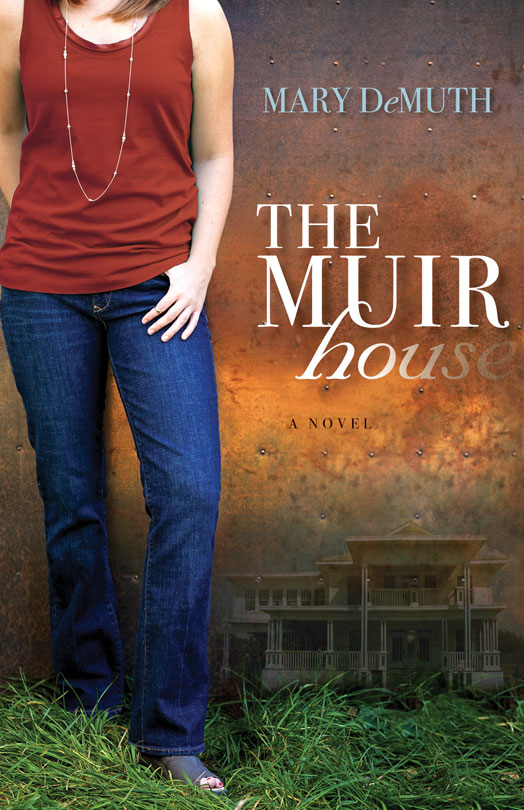
‘The Muir House’ by Mary DeMuth – Book Review

Buzz this


One of my favorite authors since I’ve been blogging and reviewing is Mary DeMuth. When she was looking for reviewers for her newest novel, 'The Muir House,' I was hopeful I’d be included! So here I am – and here it is!


Here is the synopsis of this novel:


        You’ll find home one day. 
        Sure as sweet tea on a hot afternoon.
Words from Willa Muir’s sketchy childhood haunt her dreams and color her days with longing, regret, and fear. What do the words mean? Willa is far from sure.
So when Hale Landon places a ring on her finger, Willa panics, feeling she can’t possibly say yes when so much in her past is a mystery. Bent on sorting out her history, Willa returns to Rockwall, Texas, to the Muir House Bed & Breakfast, a former funeral home.
But the old place holds her empty memory close to itself. Willa’s mother utters unintelligible clues from her deathbed, and the caretaker of the house keeps coveted secrets carefully protected. Throw in an old flame, and Willa careens farther away from ever knowing the truth.
Set in a growing suburb of Texas, THE MUIR HOUSE explores trauma, healing, love new and old, and the life-changing choices people make to keep their reputations intact.


Here is the biography of this author:


Mary DeMuth is the author of several southern novels, including A Slow Burn, Life in Defiance, and the Christy award finalists Watching the Tree Limbs and Daisy Chain. She’s also written four parenting books and a memoir, Thin Places. She’s passionate about the written word, teaching, and mentoring writers. Mary lives in Texas with her husband, Patrick, and their three children.


Here is the trailer for this compelling novel:


The main character, Willa Muir, feels that there are some secrets in her family that she needs to uncover. As is the case in real life, people have a tendency to try to convince you to leave the truth buried. Such was the case in this book:

Willa stepped back until her calves touched the wet chair, but she didn’t move away. Genie’s words stunned her to the wood floor. Was Genie trying to tell her something? That the trauma she’d forgotten could be some sort of abuse?... Had she been violated as her counselor suspected, but she dismissed? She chastised herself for thinking only of herself and not considering Genie’s pain, so obvious in front of her. Maybe Genie’s rough edges had extremely good reasons.
Genie returned to the nearly floor-to-ceiling windows. Their ancient panes blurred the house, softening its angles. “If I were you, I’d let things lie.”
At the word lie, Willa felt her soul recoil, if such a things could be said about a soul. Would she ever know the truth? Of a girl with an empty memory who agonized over filling it back up? She said nothing. Instead, she returned the empty cup to the small kitchen, set it in the uncluttered sink, and left. (pp. 91-92)

Willa’s boyfriend, Hale, had an insight about Willa’s psyche that really resonated with me:

…“Here’s my First Theory of Willa Relativity. You grew up with chaos and pain, right?”
She nodded. The sunshine drifted behind a cloud, shivering her.
“That’s your haven. What you grew accustomed to. It became your familiarity, your safe place.”
“That makes no sense. Why would chaos be a safe place?”
“Because it’s what’s comfortable for you, what you know. What if God were calling you to something radically different? What if he wanted you to let go of the drama, to turn your back on it, and walk confidently in a new place?” (pp. 126-127)

Here’s another exchange between Willa and Hale later on in the book, as she is learning more truths from her family’s past:

        “I suppose you’ll say this is God’s timing.”
“I am saying that. But not in a platitude way. Don’t you believe that he knows the best way to heal you? That he knows when you can stomach the truth?”
“I don’t feel very capable right now.” She lowered her eyes, looked at her untouched muffin, still preening on a plate.
“Wounds hurt when they’re exposed. They divvy up a lot more pain as they get better. But eventually they heal over.”
“How can you be so sure? How would you know something like that?”
“You’re not the only one who has issues.” (p. 206)   

There are lots of twists and turns in this novel. It is a book that is hard to put down; hopefully, you will have a lot of time to devote to reading it, or you will be frustrated having to put it down.

This is the third Mary DeMuth book that I had read; the others are ‘Thin Places: A Memoir’ (you can read my review here) and ‘Life in Defiance’ (you can read my review here). One common element in those books and this one is the openness and transparency of dysfunctional behavior. Mary brings up topics that are often shunned and ignored by other authors who write with a Christian worldview. Abuse in its various forms, parent’s declining health, as well as family secrets, are scrutinized with amazing truth and intensity. I am always challenged when I read a Mary DeMuth book, and I appreciate that about her work. 'The Muir House' is no exception, and I am grateful for Mary that she has the strength and courage to address difficult issues.  

You can order this book here.

This book is published by Zondervan Publishers and was provided by them for review purposes.


Monday, August 15, 2011

‘Imperfect Birds’ by Anne Lamott – Book Review

Buzz this


Since I have been reviewing books on my blog, I have gotten feedback that an author of great giftedness that is worth reading is Anne Lamott. My interest was piqued, and I had the opportunity to read her latest, ‘Imperfect Birds.’


Here is the synopsis of this novel:

Rosie Ferguson is seventeen and ready to enjoy the summer before her senior year of high school. She’s smart, athletic, and beautiful – everything her mother, Elizabeth, and stepfather, James, hoped she would be. But as the school year draws to a close, there are disturbing signs that the well-adjusted teenage life that Rosie claims to be leading is not as it seems, and that Elizabeth’s hopes for her daughter to remain immune from the world’s darker impulses could be dashed. Slowly and painfully, Elizabeth and James are forced to confront the fact that Rosie has been lying to them – and that her deceptions have profound consequences for them all. Imperfect Birds is Anne Lamott’s most honest and heartrending novel, exploring our human quest for connection and salvation as it exposes the traps that life – and we – set for ourselves.


Here is the biography of this author:


Anne Lamott is the author of the New York Times bestsellers Grace (Eventually): Thoughts on Faith, Plan B: Further Thoughts on Faith, Traveling Mercies: Some Thoughts on Faith, Bird by Bird: Some Instructions on Writing and Life, and Operating Instructions: A Journal of My Son's First Year, as well as several novels, including Rosie and Crooked Little Heart. A past recipient of a Guggenheim Fellowship, she lives in northern California.


Here is Part One of a Three-Part Interview between Ms. Lamott and Connie Martinson discussing this book:


Anne’s writing is so creative and powerful. Here she describes Elizabeth and James, the parents in this story:

His depression showed up as unpleasantness, grumbling self-pity, and running complaints about life. Normally this was their main amusement, good-natured comments about how ridiculous and hopeless everything was. Sometimes Elizabeth had to cross her legs to keep from peeing at his observations and outlandish lies. He’d say anything to make them both laugh and to life his own spirits. Just the other day, he had told people in line at Macy’s that Elizabeth was a falconer. Another time, he had told people at a protest rally that she had won a silver medal in the Munich Olympics – in dressage, of all things. She had just nodded upon hearing this and tried to look more horsey.
But while his depressions were infrequent, hers were chronic, lifelong and deep. They required extensive medication and periodic therapy to keep at bay the thoughts of killing herself or starting to drink again or both. (p. 11)

I was touched and intrigued by Elizabeth’s good friend, Rae, who positively affected her life:

Rae was Elizabeth’s authority on all things spiritual, because her beliefs were so simple and kind. You were loved because God loves, period. God loved you and everyone, not because you believed certain things, but because you were a mess, and lonely, and His or Her child. God loved you no matter how crazy you felt on the inside, no matter what a fake you were; always, even in your current condition, even before coffee. God loves you crazily, like I love you, Rae said, like a slightly overweight auntie, who sees only your marvelousness and need. (p. 16)

I found her writing to be extremely expressive and impressive. Here is a passage that I found to be amazing. Rosie’s amazing mind is described here:

Once, at two years old, before she was talking, she had started Andrew’s car. It seemed a philosophical thing, or instinctual hardwiring, that she could see relationships between things, a scientific version of what James had – the noticing genes necessary to be a good writer. Rosie’s mind liked to do things with its hands. She liked to imagine things that you could not see, like black holes and the far side of a pyramid. She was at home in the abstract realm of witnessing and synthesizing. (p. 32)

Partly based on Rae’s influence, and partly based on God’s presence in this world that is hard to ignore, Elizabeth called out to Him, although she wasn’t exactly sure to Whom she was calling:

She locked herself in the bathroom and cried silently until she was raw. Desperately, she tried to pray, until she remembered she didn’t believe in god – but she had felt that shard of something deep inside that she could only call not me, so she cried out in silence to the speck of light, Help me! I’m begging. She felt the wet pounding of her heart in her stuffed-up head. She hit the bathroom rug so hard that her head hurt, and she cradled it like an injured bird. (pp. 191-192)

Anne was born and raised in San Francisco, and still lives in that area, where this novel takes place. Her books are often autobiographical. I was not familiar with Anne’s life or story prior to reading this book, so I did some research. I have appreciated what I’ve learned; she seems very compassionate and empathetic. She wears her liberalism on her sleeve, and is also a person of faith. Her writing is a little more raw than what I have been used to of late, but it is real and thoughtful and profound. I definitely was moved by this book, and will be seeking out more Lamott titles, found in the fiction and non-fiction genres. This is the third book featuring the Ferguson clan – the first two being ‘Rosie’ and ‘Crooked Little Heart.’ I hope Ms. Lamott continues to tell us the story of this family; I am praying they come through their trials to be stronger on the other side.

You can order this book here.

This book was published by Riverhead Books, a division of the Penguin Group, and provided by them for review purposes.


Tuesday, August 9, 2011

‘God and Stephen Hawking: Whose Design Is It Anyway?’ by John C. Lennox – Book Review

Buzz this


One of the most important scientists over the last several decades is Stephen Hawking, who recently wrote a book, ‘The Grand Design,’ that has caused a stir. In his book, ‘God and Stephen Hawking: Whose Design Is It Anyway?’ Dr. John Lennox rebuts his arguments.


Here is a synopsis of this book:


“It is a grandiose claim to have banished God. With such a lot at stake we surely need to ask Hawking to produce evidence to establish his claim. Do his arguments really stand up to close scrutiny? I think we have a right to know.”
The Grand Design, by eminent scientist Stephen Hawking, is the latest blockbusting contribution to the “New Atheist” debate, and claims that the laws of physics themselves brought the universe into being, rather than God. In this swift and forthright reply, John Lennon, Oxford mathematician and author of God’s Undertaker, takes a closer look at Hawking’s logic.
In lively, layman’s terms, Lennox guides us through the key points in Hawking’s arguments – with clear explanations of the latest scientific and philosophical methods and theories – and demonstrates that far from disproving a Creator God, they make his existence seem all the more probable.


Here is the biography of this author:


John C. Lennox MA PhD DPhil DSc is Professor of Mathematics at the University of Oxford and Fellow in Mathematics and the Philosophy of Science at Green Templeton College. He has debated Richard Hawkins and Christopher Hitchens and lectured in many universities around the world.


Here is an interview with Dr. Lennox by Greg Clarke: 


In the Introduction, Dr. Lennox shares how God and science have been converging of late:

God is very much on the agenda these days. Scientist have made sure of it by publishing book after book, with titles like Francis Collins’ The Language of God, Richard Dawkins’ The God Delusion, Victor Stenger’s God: The Failed Hypothesis, Robert Winston’s The Story of God, and so on, and on.
Some of these books have been runaway best-sellers. People obviously want to hear what the scientists have to say. That is not surprising, for science has immense cultural and intellectual authority in our sophisticated modern world. This is, in part, because of its phenomenal success in generating technologies from which all of us benefit, and in part because of its capacity to inspire, by giving us increased insight into the wonders of the universe as communicated by beautifully made television documentaries. (p. 11)

Dr. Lennox explains how many scientists deal with God:

Yet this is essentially what many scientists (and others) do with God. They define the range of questions that science is permitted to ask in such a way that God is excluded from the start; and then they claim that God is unnecessary, or doesn’t exist. They fail to see that their science does not answer the question as to why something exists rather than nothing, for the simple reason that their science cannot answer that question. They also fail to see that by assumption it is their atheist world-view, not science as such, that excludes God.
The scientists did not put the universe there. But neither did their theories, nor the laws of mathematical physics. Yet Hawking seems to think they did. In A Brief History of Time he hinted at this kind of explanation, suggesting that a theory might bring the universe into existence… (p. 39)

I love this point that Dr. Lennox makes to one of Dr. Hawking’s argument:

Hawking has signally failed to answer the central question: why is there something rather than nothing? He says that the universe was inevitable. But how did gravity come to exist in the first place? What was the creative force behind its birth? Who put it there, with all its properties and potential for mathematical description in terms of law? Similarly, when Hawking argues in support of his theory of spontaneous creation, that it was only necessary for “the blue touch paper” to be lit to “set the universe going”, I am tempted to ask: where did this blue touch paper come from? It is clearly not part of the universe, if it set the universe going. So who lit it, in the sense of ultimate causation, if not God? (p. 44)

Dr. Lennox makes this final comment:

Science and history are not the only sources of evidence for the existence of God. Since God is a Person and not a theory, it is to be expected that one of the prime evidences for his existence is personal experience. To develop this important matter, it would take us far beyond the intended scope of this little book. Nevertheless I wish to add my voice to the many millions who can and would testify to the profound and central role that faith in Christ as Lord has on our lives, bringing assurance of peace with God, a new power for living, and a certain hope based on the resurrection of Christ. Such a hope defies both the death barrier and Hawking’s bleak reductionist notion that we are nothing more than a random collection of molecules derived from stars. We shall, in fact, outlast the stars.
Hawking imagines that the potential existence of other life forms in the universe undermines the traditional religious conviction that we are living in a unique, God-created planet. I find it faintly amusing that atheists often argue for the existence of extra-terrestrial intelligence beyond earth. They are only too eager to denounce the possibility that there exists a vast, intelligent being “out there,” namely God, who has left his fingerprints all over his creation.
Hawking’s fusillade will not shake the foundations of an intelligent faith that is based on the cumulative evidence of science, history, the biblical narrative, and personal experience. (pp. 94-95)

In the Conclusion, Dr. Lennox shares what he holds happens with this book:

I even dare to hope that, for some of you, this little book may be the start of a journey that will eventually lead to your coming to believe in the God who not only made the universe but also conferred on you the immeasurable dignity of creating you in his image, with the capacity for thought and the intellectual curiosity that got you reading this book in the first place. In turn that could even be, as it was for me, the first step in embarking on what is by definition life’s highest adventure – getting to 
know the Creator through the Son that has revealed him. (p. 96)

I really appreciated this book. Dr. Lennox points out the many flaws in Dr. Hawking’s argument that there is no need for God as Creator of the universe. I am so amazed at the hubris of some of these scientists, and pray that they learn the truth – and gain some humility – before they meet their Maker. I am glad that Dr. Lennox knows the truth.

You can order this book here.

This book was published by Lion Books and provided by the LitFuse Publicity Group for review purposes.


Clicky Web Analytics